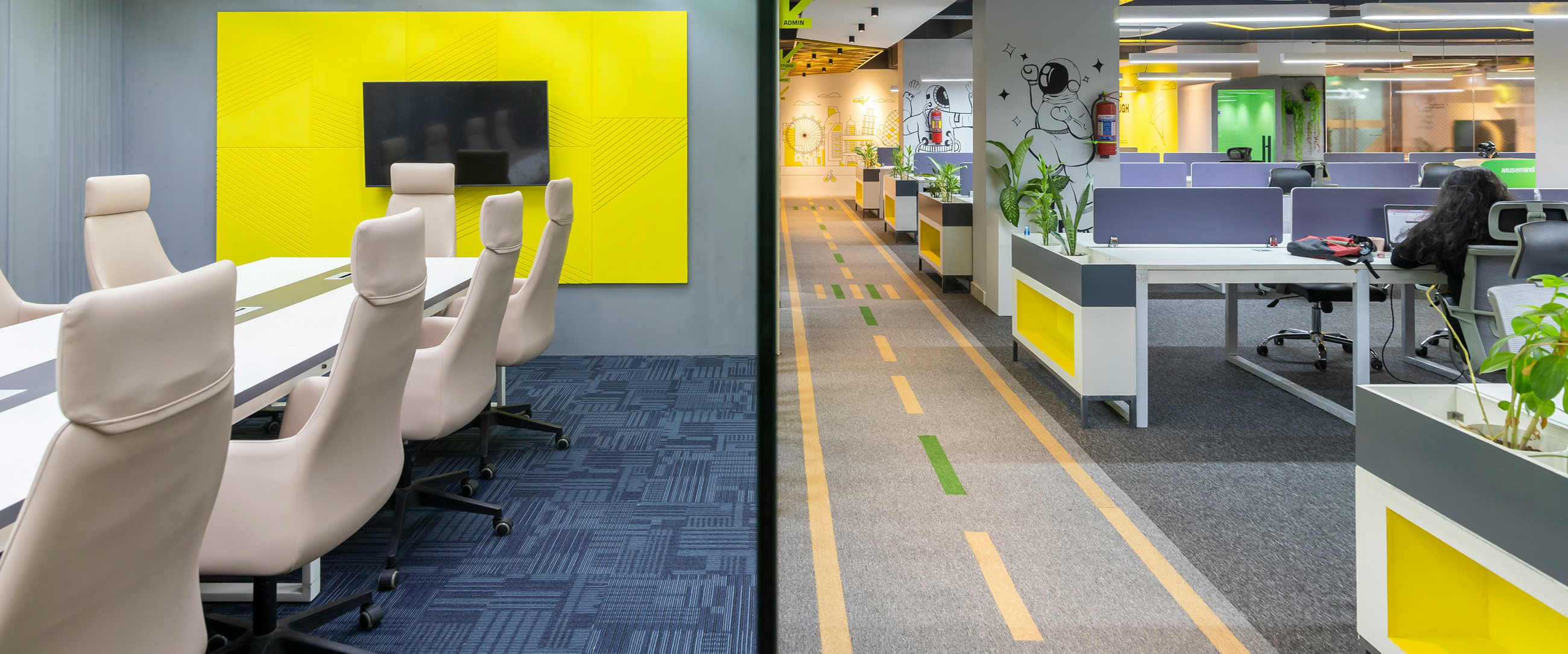
Workplace Design
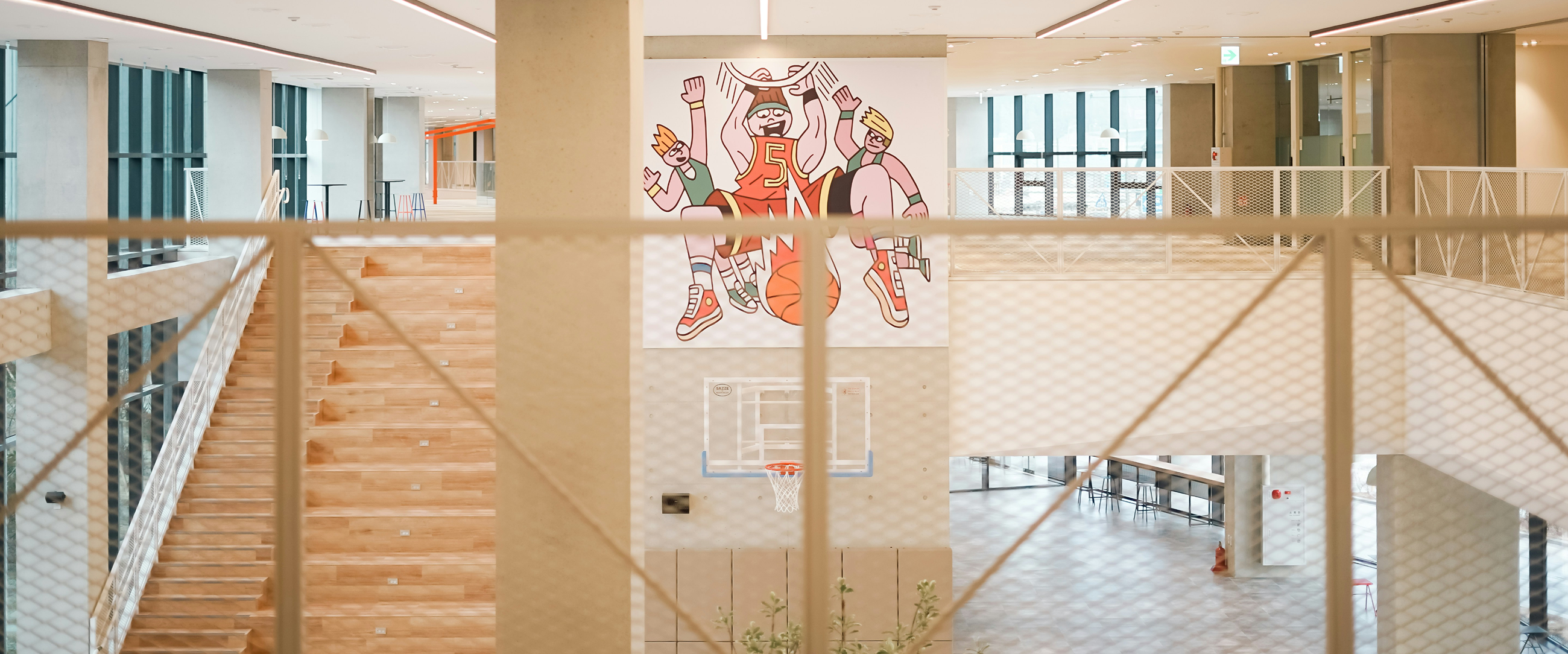
Workplace Design
Hybrid work is no longer a temporary adjustment. Across Cape Town, Johannesburg, and the rest of South Africa, the workplace has evolved into an ecosystem — employees split time between home offices, coworking hubs, and corporate headquarters.
Conceptually, hybrid work offers autonomy and flexibility. In practice, however, many organisations are implementing policy changes without rethinking their office interior design, workplace strategy, or commercial interior architecture.
At Inhouse Design Studio, we are seeing a clear pattern: hybrid work succeeds or fails based on how well the physical workplace supports human behaviour.
Here are four critical hybrid workplace mistakes — and how intelligent workplace interior design in South Africa can solve them.
1. Treating Talent as Transactional Instead of Cultural
Many businesses focus heavily on salary packages and remote work policies to attract and retain talent. While important, these elements alone create a purely transactional relationship.
The physical workplace still plays a powerful role in engagement.
Employees who enjoy coming into the office are consistently more productive, more connected, and less likely to leave. The office is not obsolete — it is a strategic asset.
As Phillip Wyatt, Project Director at Inhouse Design Studio, explains:
“The office should never feel like an obligation. Through thoughtful corporate office interior design, it becomes a cultural anchor — a place that reinforces belonging, identity, and shared purpose.”
A well-designed environment communicates value far more effectively than policy alone.
2. Changing Policy, Not Place
One of the most common hybrid mistakes is adjusting workplace rules without adjusting the workspace itself.
Organisations move to unassigned seating and flexible attendance but fail to upgrade their office space planning. The result? Workplace nomads drifting through open-plan floors without privacy, structure, or identity.
Many employees report having less control in the office than at home. Individual contributors often sit in exposed open-plan zones, while leaders retain enclosed offices — creating an imbalance in privacy and comfort.
If businesses want employees back in the office, the space must offer:
Team-based neighbourhoods
Reservable workstations
Acoustic privacy zones
Defined collaboration hubs
Comfortable breakout areas
Hybrid strategy without spatial redesign leads to disengagement. Hybrid strategy supported by expert office refurbishment design creates clarity and cohesion.
3. Missing the Real Need: Control + Belonging
Flexibility is not just about location — it is about control.
Employees want:
Choice over how they work
A sense of belonging
Predictability in their environment
Spaces that support focus and collaboration
Simply allowing remote days does not solve these deeper psychological needs.
Research consistently shows that many employees would prefer an assigned or semi-assigned workspace over constant desk uncertainty. People still crave a “home base” within the office.
At Inhouse Design Studio, our approach to modern office interiors centres on creating destination workplaces — environments employees actively choose to use because they feel comfortable, familiar, and empowering.
Hybrid success lies in balancing autonomy with identity.
4. Forgetting About Focus
With hybrid work comes a surge in video calls and digital collaboration. Some organisations have responded by designing “collaboration-only” workplaces — large open areas intended to encourage interaction.
This is a critical mistake.
Collaboration is important, but so is deep work.
Employees commuting into the office do not want to spend the entire day in noisy, overstimulating environments. Access to private enclaves, acoustic pods, and enclosed focus rooms is essential.
Three of the most valued features in contemporary workplaces relate directly to privacy:
Hybrid collaboration rooms
Single-person video call booths
Enclosed quiet spaces
Successful commercial interior design in Cape Town and Johannesburg must support both connection and concentration.
The Open-Plan Problem: Why “Walls Down” Didn’t Work
For over two decades, open-plan offices were considered modern, efficient, and collaborative. Across South Africa, organisations rushed to remove walls in pursuit of cost savings and visibility.
The reality has been different.
Open-plan environments often lead to:
Constant interruptions
Increased digital communication (even when colleagues sit nearby)
Reduced face-to-face interaction
Social withdrawal
Global research has shown that when employees moved to open-plan offices, direct in-person collaboration actually dropped significantly, while email and messaging increased.
Open-plan without zoning does not create collaboration — it creates distraction.
The Solution: Zoned, Human-Centred Office Design
The future of office interior design in South Africa is not open-plan versus private offices. It is structured flexibility.
A more effective model gaining traction in both Cape Town and Johannesburg is the creation of workplace “neighbourhoods” — defined zones that support different work modes.
Employees typically move through multiple zones during the day:
Social café areas for informal connection
Team collaboration hubs
Research and ideation spaces
Quiet focus rooms
Deep-work chambers for uninterrupted concentration
This layered office space planning strategy allows employees to alternate between energy and calm — collaboration and focus.
At Inhouse Design Studio, we design these environments to align with behavioural patterns, ensuring that each square metre supports purpose.
Designing a Magnetic Workplace in South Africa
In today’s competitive talent market, the physical workplace can be a differentiator.
A “magnetic office” is one that employees actively choose over working from home or a coffee shop.
Key elements of a magnetic workplace include:
Biophilic design (natural materials, greenery, daylight)
Varied interior settings supporting multiple work modes
Comfortable, tactile furnishings
Integrated technology
Multi-functional communal spaces
Biophilic workplace interior design has been shown to improve wellbeing and productivity by reinforcing our natural connection to the environment.
When employees feel good in a space, engagement follows.
The Hybrid Design Challenge Ahead
Remote work will continue to shape how organisations operate across South Africa. The challenge for businesses is not whether to adopt hybrid models — it is how to design workplaces compelling enough to justify the commute.
As Phillip Wyatt notes:
“The future office must earn attendance. Through strategic workplace interior design, we create environments that draw people in — not mandate their presence.”
Hybrid success requires more than policy. It demands intelligent corporate office interior design, data-driven planning, and environments that reflect how people truly work.
At Inhouse Design Studio, we believe the future of work in South Africa will belong to organisations that design with intention — creating workplaces that balance flexibility, focus, collaboration, and belonging.
Because the office is no longer just a building. It’s an experience.
Workplace Design
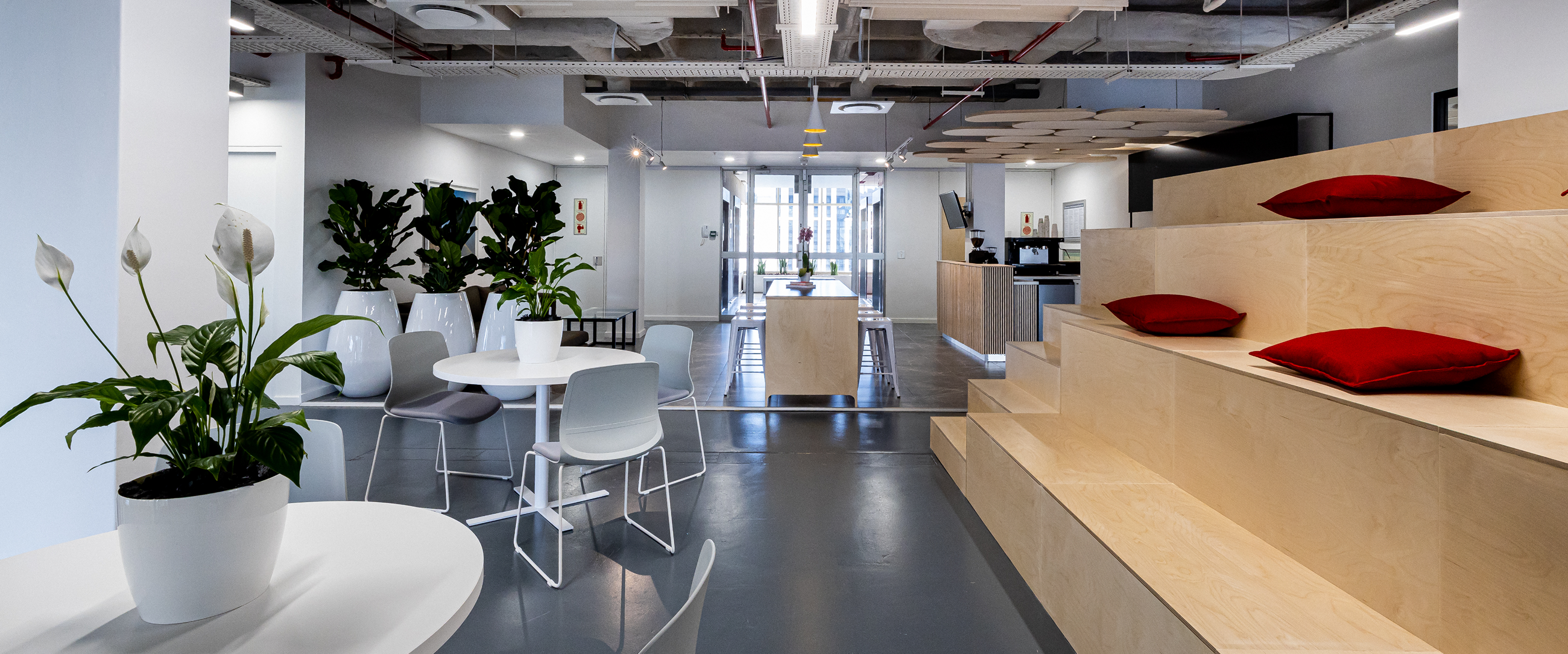
Workplace Design
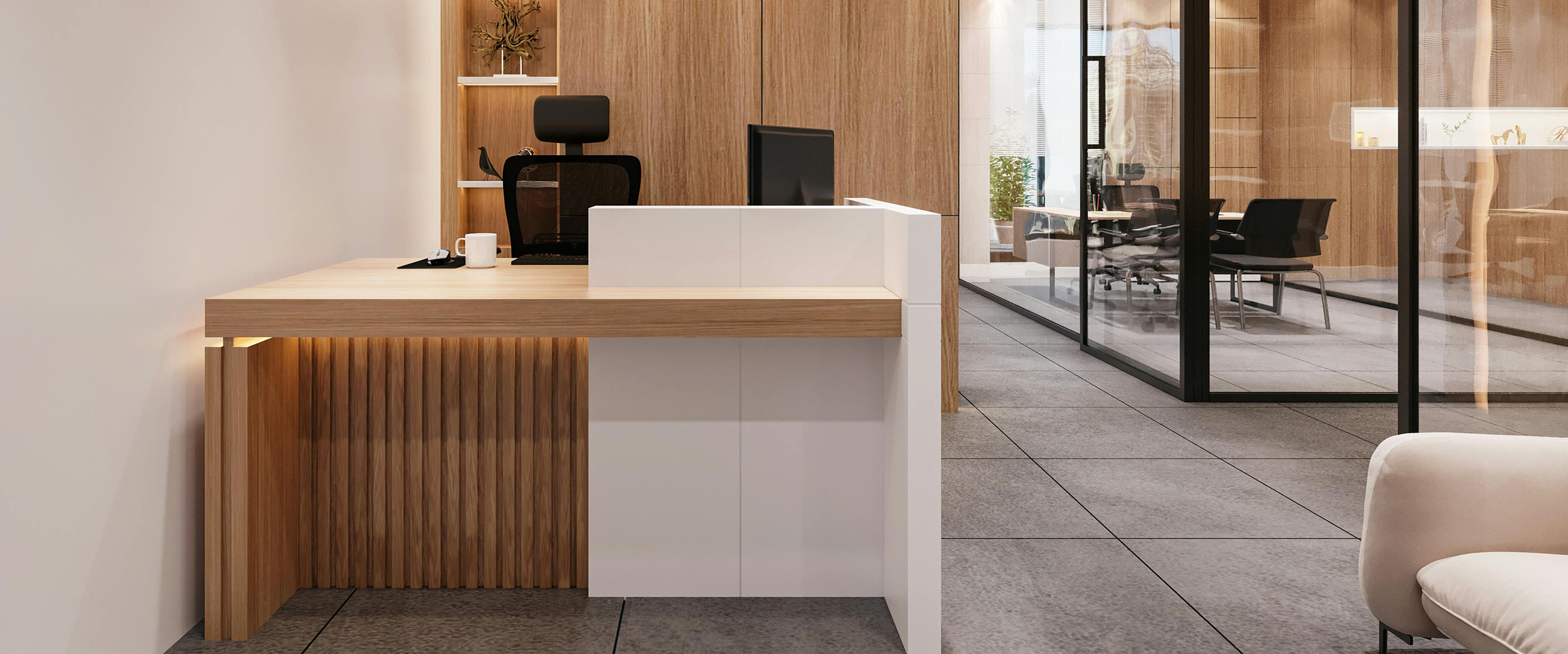
Workplace Design