Workplace Design
Workplace Design
An efficient office layout does more than optimise floor space — it directly influences productivity, collaboration, and employee wellbeing. In today’s evolving workplace, planning an office layout requires a strategic balance between functionality, flexibility, and experience.
At Inhouse Design Studio, we specialise in interior office design that supports workplace experience, enhances office design and wellbeing, and enables employee engagement through thoughtful spatial planning.
Start With How Your Teams Work
The most efficient office layouts are designed around people — not furniture. Before planning any space, it’s essential to understand how teams operate on a daily basis.
Key questions to consider:
How often do teams collaborate versus focus independently?
Which departments require privacy or acoustic control?
What percentage of staff work hybrid or remotely?
Designing with these insights ensures the layout supports actual workflows, improving overall workplace efficiency and employee satisfaction.
Zone the Office by Activity
Activity-based zoning is a proven approach to designing for employee engagement. Rather than a one-size-fits-all layout, the office is divided into zones that support different work modes.
Typical zones include:
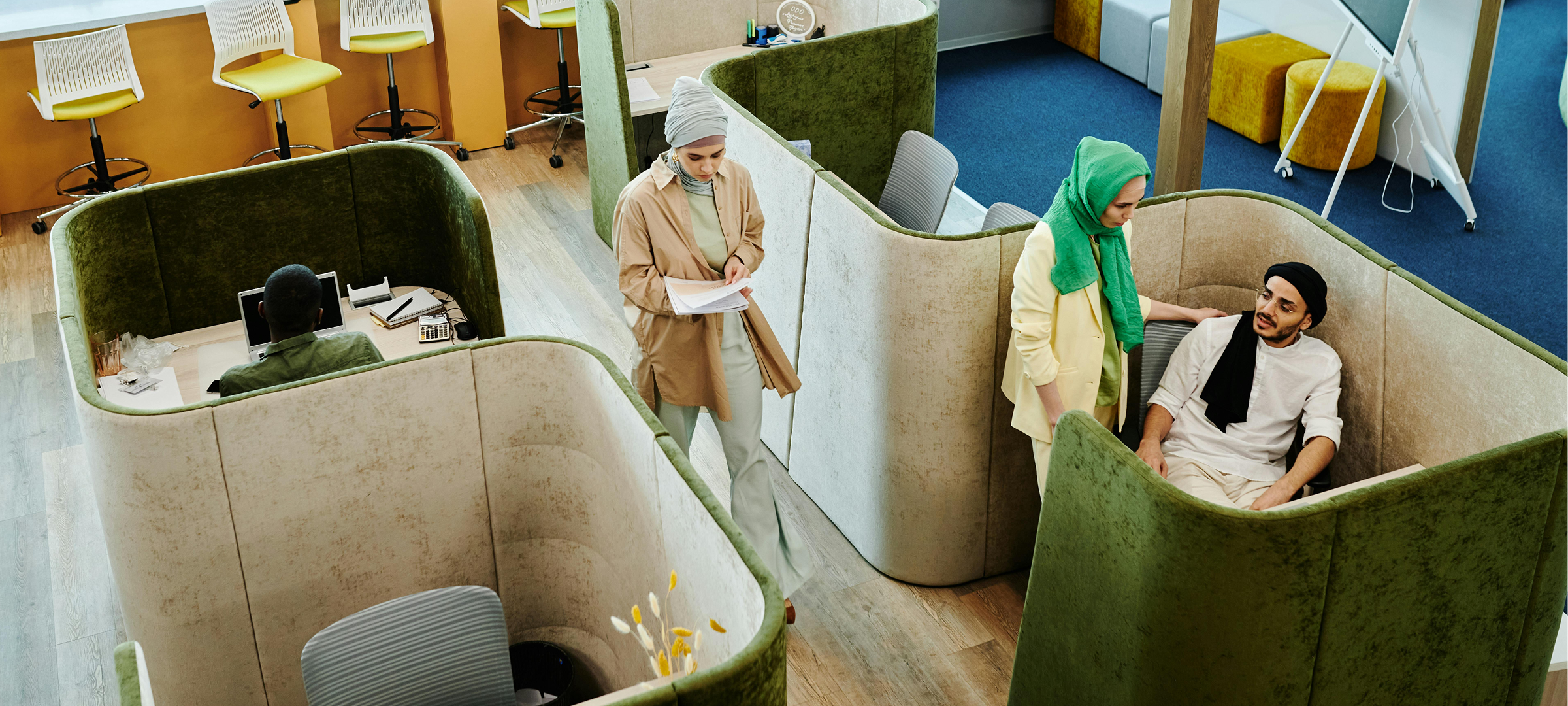
Focus areas for deep, uninterrupted work
Collaborative spaces for meetings and teamwork
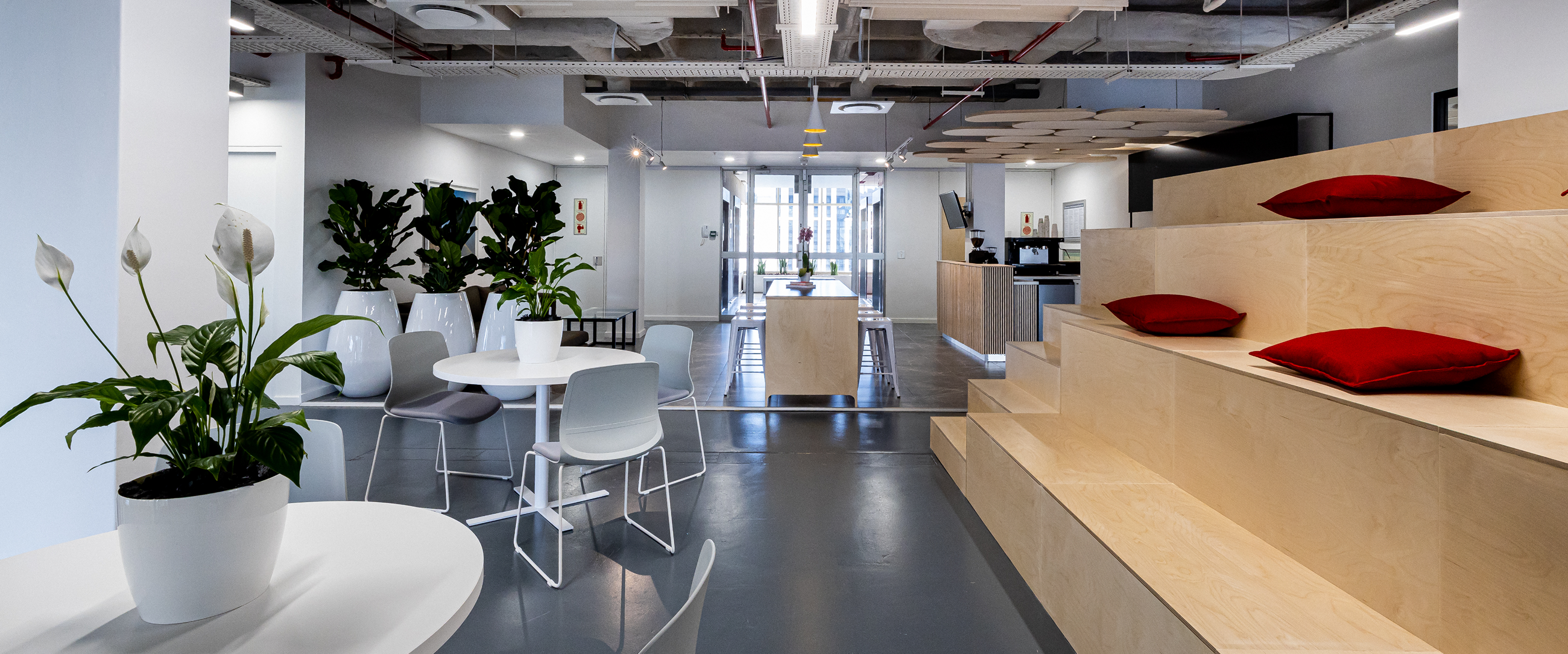
Informal breakout areas for connection and culture
Support spaces such as printing, storage, and utilities
Clear zoning improves circulation, reduces distractions, and strengthens the overall workplace experience.
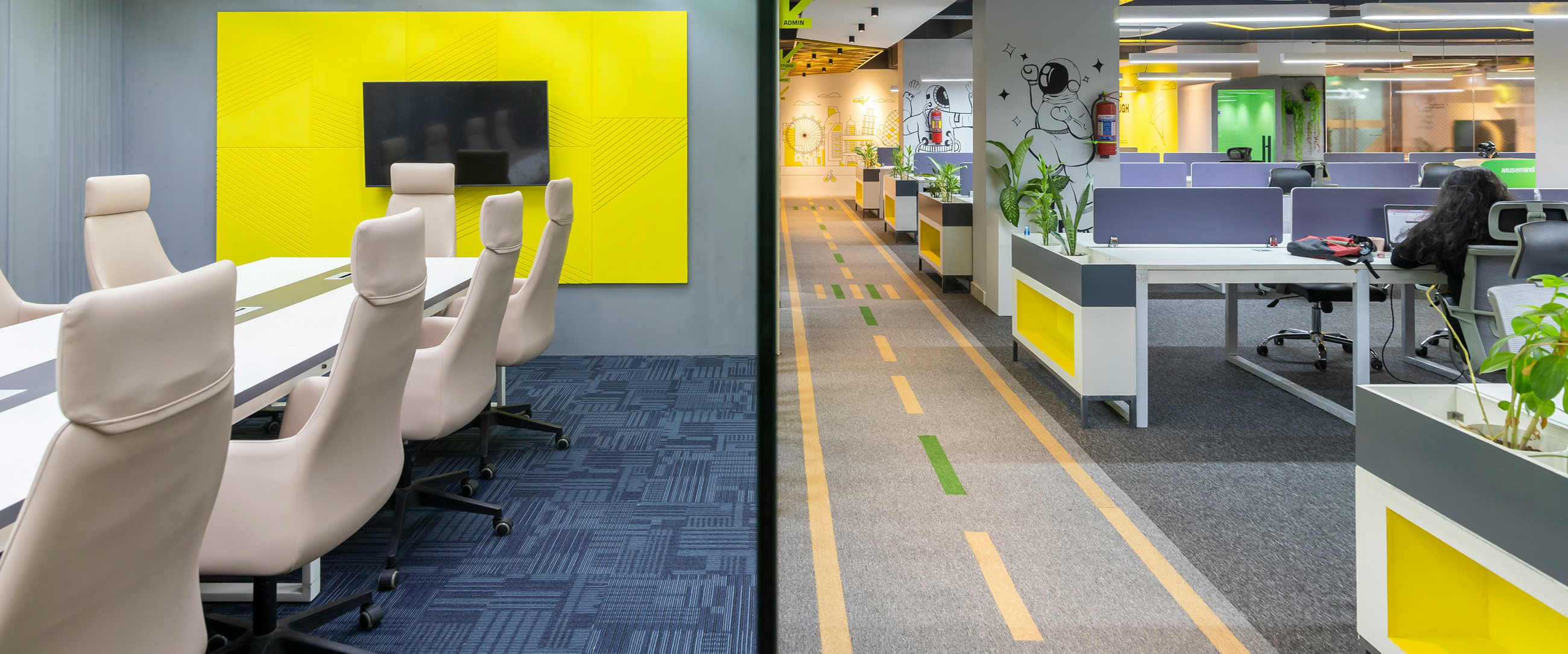
Prioritise Circulation and Flow
Poor circulation is one of the biggest barriers to office efficiency. Walkways should feel intuitive and unobstructed, allowing people to move through the space without disruption.
Efficient office layouts:
Minimise unnecessary travel between departments
Separate high-traffic routes from focus areas
Encourage natural movement and visual clarity
Well-planned circulation supports both productivity and wellbeing, reducing friction in daily operations.
4. Design for Wellbeing and Comfort
Office design and wellbeing go hand in hand. An efficient office is one where employees feel physically and mentally supported throughout the day.
Key considerations include:
Access to natural light and ventilation
Ergonomic workstations and seating
Acoustic treatment to manage noise
Comfortable temperature control
When comfort is prioritised, employees are more focused, energised, and engaged.
Build in Flexibility for the Future
Workplaces must be able to evolve. Flexible layouts allow organisations to adapt to growth, changing team structures, and hybrid work patterns without constant redesign.
Flexible design strategies include:
Modular furniture systems
Multi-purpose meeting spaces
Reconfigurable workstations
This adaptability protects long-term efficiency and ensures the office remains relevant over time.
Use Design to Reinforce Culture
Efficiency is not only about speed or density — it’s also about alignment. An office layout should reflect company values and encourage the behaviours the organisation wants to see.
Design elements such as shared spaces, visibility, and material choices can support:
Collaboration and transparency
Focus and professionalism
Connection and belonging
When culture and layout align, employee engagement naturally increases.
Planning Offices That Perform
A truly efficient office layout balances spatial logic with human experience. At Inhouse Design Studio, our interior office design approach integrates workplace experience, wellbeing, and engagement into every layout decision.
Based in Cape Town, we work with businesses to create office environments that are intentional, adaptable, and performance-driven.
Thoughtfully planned spaces support people — and when people are supported, performance follows
Workplace Design
Workplace Design
Workplace Design