Workplace Design

Workplace Design
In today’s hyper-connected world, it seems ironic that loneliness is on the rise. Yet across the globe — and increasingly in South Africa — professionals are reporting a growing sense of isolation.
For decades, the workplace has been one of the most significant social ecosystems in adult life. It’s where friendships are formed, mentorships develop, and daily human interaction naturally occurs. But modern work patterns — from endless virtual meetings to reduced informal interaction — are reshaping how we connect.
The question many business leaders are asking is: Is remote and hybrid work to blame? The answer is more nuanced.
The Decline of Workplace Connection
While flexible work has changed how we interact, social disconnection began long before the pandemic.
Over the past decade, time spent with friends has steadily decreased, while time spent alone has increased. These broader societal shifts are mirrored in the workplace. Fewer employees today say they truly know their colleagues on a personal level compared to five years ago.
This matters more than many realise.
Research consistently shows that over half of adults form close friendships at work. In fact, as adults, we are more likely to meet meaningful friends through work than through our neighbourhoods or extended social circles.
When those connections weaken, engagement, wellbeing, and performance often follow.
Why Returning to the Office Isn’t a Silver Bullet
There is a growing belief that simply bringing employees back to the office full-time will restore connection. However, forced attendance without meaningful interaction can actually deepen disengagement.
Many professionals choose flexible work for legitimate reasons — focus, family balance, reduced commuting stress. Removing that autonomy can lower morale, which in turn exacerbates feelings of isolation.
The issue isn’t strictly location. It’s the quality of interaction.
What Actually Drives Loneliness at Work?
Interestingly, workplace loneliness is influenced more by behavioural and structural factors than by whether someone works remotely or in-office.
Key contributors include:
1. Meeting Overload
Counterintuitively, employees who spend the most time in meetings often report higher levels of loneliness. Back-to-back virtual calls can create surface-level interaction without genuine connection.
2. Leadership Isolation
Senior leaders frequently report feeling more isolated than junior staff. The higher one climbs, the fewer peers they may feel comfortable confiding in.
3. Limited Personal Conversation
Work-focused discussions dominate many professional environments. Yet conversations about tasks and deadlines rarely build strong social bonds.
Designing Workplaces That Foster Real Connection
As specialists in workplace interior design and office space planning in South Africa, we understand that connection is shaped not only by culture — but by environment.
Creating meaningful workplace relationships requires intentional design and behavioural shifts.
Create Space for Informal Interaction
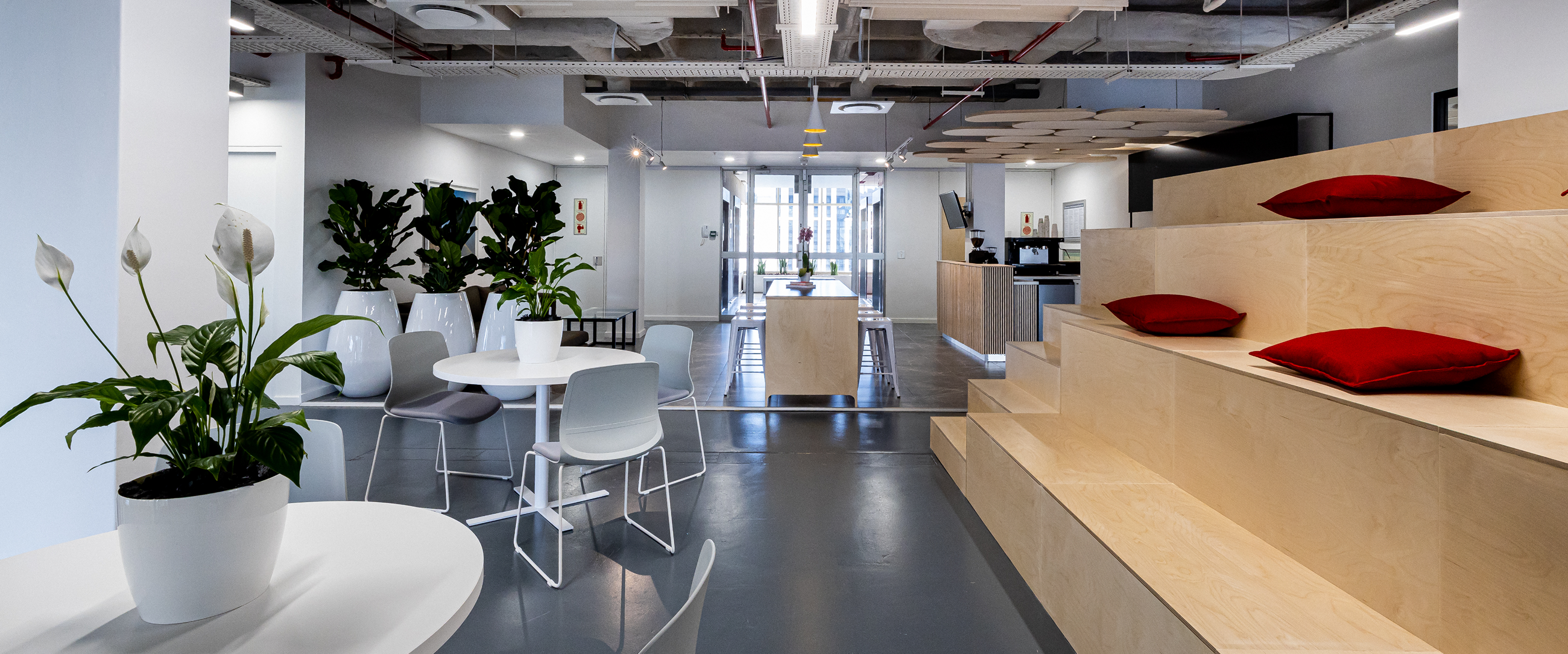
Casual conversation is one of the strongest predictors of connection between colleagues. Breakout lounges, café-style seating areas, and collaborative hubs encourage natural interaction within the flow of the workday.
Optional after-hours events often see low attendance. Instead, organisations should embed social moments into existing touchpoints — and leaders should actively participate.
Prioritise Quality Over Quantity in Meetings
Eliminating low-value meetings frees time for deeper engagement. When teams do meet, allocating time for informal check-ins can significantly strengthen relationships.
Leverage Intentional In-Person Time
Research suggests that even one meaningful in-person interaction per month can deliver most of the social benefits of office work. The focus should be on purposeful gatherings rather than rigid attendance policies.
Build a Culture of Trust and Psychological Safety
While small talk builds familiarity, authentic connection grows from vulnerability and trust. Workplaces that cultivate psychological safety — where employees feel comfortable sharing ideas and concerns — not only perform better but also foster stronger social networks.
The Role of the Modern Office
Today’s modern office interiors must support both productivity and belonging. This means designing environments that offer:
Comfortable communal zones
Private areas for focused work
Flexible collaboration spaces
Hospitality-inspired breakout areas
Technology that enhances — rather than replaces — human interaction
The future of commercial interior design in South Africa is not about mandating presence. It’s about creating environments that make people feel connected, valued, and inspired.
Connection Is a Strategic Priority
Loneliness is not just a personal wellbeing issue — it impacts engagement, retention, and organisational performance.
Businesses that understand this will move beyond attendance metrics and instead focus on cultivating meaningful workplace relationships through culture, leadership behaviour, and thoughtful office interior design.
Because in the end, the most successful workplaces won’t simply be places where people work.
They’ll be places where people belong.
Workplace Design
Workplace Design
Workplace Design