Workplace Design
Workplace Design
With roughly a quarter of South Africans working remotely on any given day, many organisations have embraced hot desking as a logical cost-saving strategy. On paper, it makes sense: fewer people in the office means fewer permanently assigned desks.
In reality, however, hot desking has become one of the most debated shifts in office interior design and workplace space planning.
Employees aren’t resisting change — they’re reacting to poor implementation.
At Inhouse Design Studio, we’ve seen first-hand how the wrong approach to flexible seating can negatively impact culture, collaboration, and productivity.
As Phillip Wyatt, Project Director at Inhouse Design Studio, explains:
“Flexibility should enhance performance — not create friction. If your workplace design strategy introduces stress before the workday even begins, the layout needs rethinking.”
Why Traditional Hot Desking Frustrates Employees
At its core, conventional hot desking removes personal ownership of space. Instead of having a dedicated workstation, employees arrive and search for an available desk.
The most common concerns include:
Wasting time hunting for a suitable workstation
Inconsistent setups (lack of dual monitors, poor ergonomics, no standing desks)
Loss of personalisation and team identity
Difficulty locating colleagues
Reduced sense of belonging
From a commercial interior design perspective, this creates both psychological and logistical strain. Carrying laptops and materials from space to space can leave employees feeling unsettled — impacting focus and engagement.
Workplace interior design should create clarity and confidence — not daily uncertainty.
The Collaboration Myth in Office Design
One assumption behind hot desking is that random seating improves collaboration. In practice, scattering teams across a floorplate often produces the opposite effect.
Effective office space planning requires intentional adjacency. When employees cannot easily find teammates, spontaneous collaboration decreases. Managers lose visibility. Team cohesion weakens.
As Phillip Wyatt notes:
“You can’t design collaboration by accident. Modern office interiors must be strategically zoned to support how teams actually work — not how we assume they might.”
Simply placing people into a pool of unassigned desks does not replace thoughtful workplace interior design strategy.
The Hidden Business Costs
While hot desking is often introduced to reduce real estate overhead, dissatisfaction carries its own price.
Disengaged employees are more likely to leave. Replacing talent often outweighs the short-term savings achieved through desk reduction.
Forward-thinking office design firms in South Africa understand that successful environments balance operational efficiency with human experience.
How Inhouse Design Studio Reimagines Flexible Workspaces
Hot desking doesn’t have to fail. With the right design framework, it can evolve into a flexible, high-performance workplace model.
At Inhouse Design Studio, we approach flexible environments through strategic corporate office interior design principles:
1. Team-Based “Neighbourhoods”
Instead of assigned desks, employees are aligned to a home zone within the office. This preserves flexibility while maintaining team identity and workflow efficiency.
This approach supports collaboration without sacrificing belonging — a key pillar of modern office interior design.
2. Intelligent Desk Booking Systems
“Hoteling” allows employees to reserve workstations suited to their needs — whether that’s a dual-screen ergonomic setup, a quiet focus pod, or proximity to a project team.
Removing uncertainty improves both productivity and user experience — essential components of successful office refurbishment design.
3. A Curated Mix of Work Settings
Today’s high-end office interior design studio must deliver more than desks. A balanced environment includes:
Acoustic focus zones
Collaborative project hubs
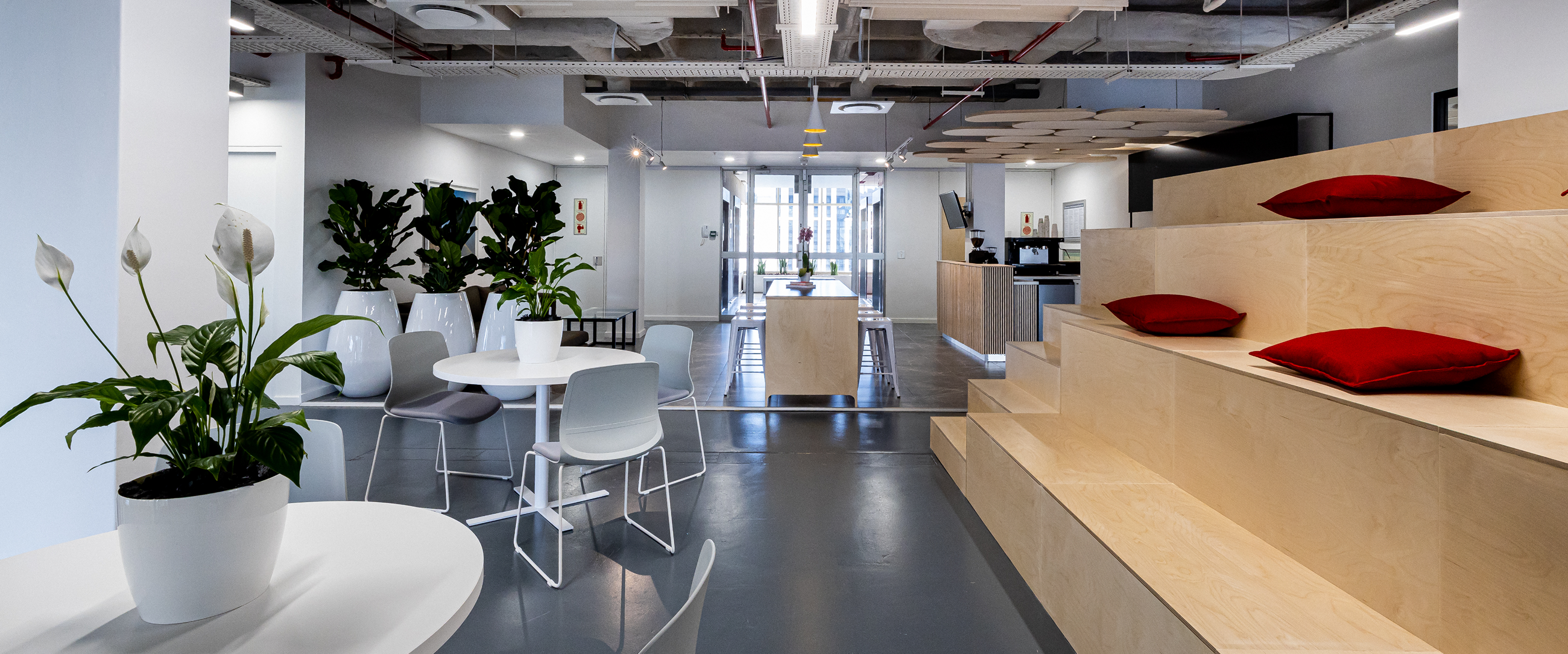
Informal café-style breakout areas
Private call booths
Formal meeting rooms with integrated technology
This layered spatial planning ensures employees control how and where they work — a defining factor in contemporary workplace interior design in South Africa.
4. Design for Choice, Not Chaos
Flexibility must be intentional. Reducing square meterage without enhancing spatial quality leads to frustration.
As Phillip Wyatt explains:
“Successful office design isn’t about fitting more people into fewer desks. It’s about designing environments that respond to human behaviour — supporting concentration, collaboration, and culture simultaneously.”
The Future of Office Interior Design in South Africa
Hybrid work is here to stay. But the office remains a powerful cultural anchor.
The future of office interior design in Cape Town, Johannesburg, and across South Africa lies in strategic, data-driven layouts that prioritise experience alongside efficiency.
Hot desking is not inherently flawed — poor design is.
When guided by experienced professional office designers, flexible workplaces can become agile, engaging, and aligned with the way modern teams truly operate.
At Inhouse Design Studio, we believe workplace design should empower people — not displace them.
Workplace Design
Workplace Design
Workplace Design