Get In Touch
Inhouse designs environments where identity, wayfinding, and spatial storytelling work as a single coherent system, not as decoration applied after the fact.
Design changes how people arrive, collaborate, decide, and stay.
Physical environments communicate continuously. When the signals align, the experience becomes legible, confident, and believable.
A branded environment should do two things at once: help people move and help people understand what this place is.
A coherent environment helps visitors, staff, and customers understand the place faster and with more confidence.
Experiential design reinforces identity internally as much as externally, helping communities feel connected to a shared environment.
Sequence, symbolism, material, and message create a stronger imprint than flat communication can achieve alone.
Orientation, signage, and navigational clarity are not separate systems. They are how the brand is experienced inpractice.
Bring Inhouse in when the environment needs to communicate with more clarity, more authority, and more spatial intelligence.
Organisations, brands, destinations, and developers who need space to communicate with more clarity and impact.
Site information, user groups, brand framework, circulation challenges, and the experience the environment should create.
Strategic definition, spatial communication thinking, and a coherent route from brand language to built experience.
Bring Inhouse in when the environment needs to communicate with more clarity, more authority, and more spatial intelligence.
Organisations, brands, destinations, and developers who need space to communicate with more clarity and impact.
Site information, user groups, brand framework, circulation challenges, and the experience the environment should create.
Strategic definition, spatial communication thinking, and a coherent route from brand language to built experience.
Project proof is strongest when identity, spatial communication, and user experience are shown working together.
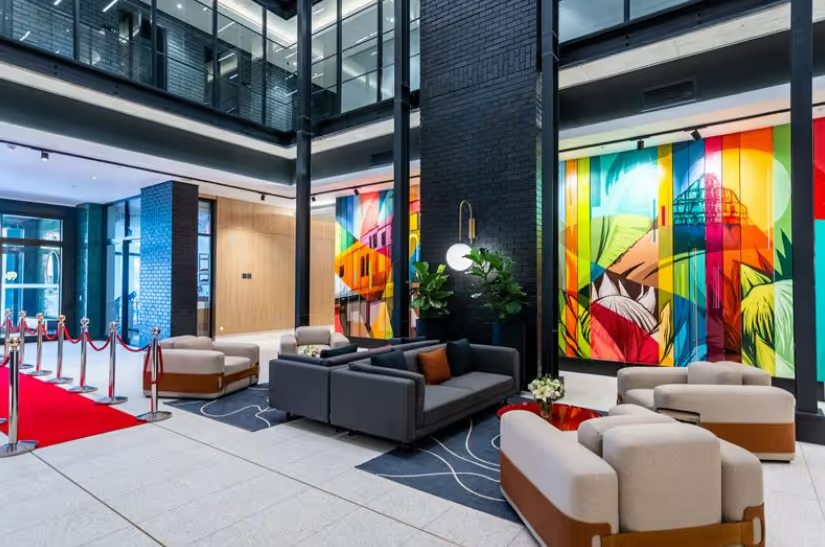

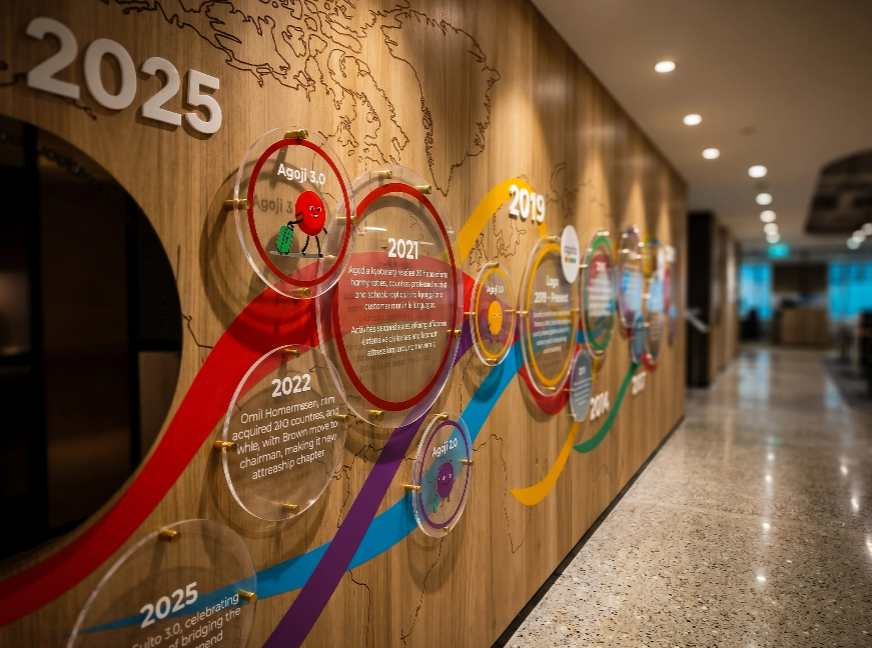
Clarify where inconsistency, confusion, weak identity, or fragmented user journeys were limiting the experience.
Describe the wayfinding logic, graphic language, focal interventions, materials, and storytelling devices that gave the place coherence.
Focus on improved legibility, stronger brand recognition, better orientation, and a more convincing overall experience.
A workplace where identity extends beyond the reception desk.
A branded environment designed to guide and reassure.
A strong experiential environment creates confidence through legibility. It uses scale, colour, language, contrast, sequence, and placement to clarify where to go, what matters, and what the place stands for.
The threshold must signal identity and set the tone without overload, so people understand the place as they enter it.
Wayfinding works when information meets the user at the exact moment they need to decide, turn, or continue.
Repeated logic across floors, zones, and touchpoints reduces friction and helps movement feel natural rather than effortful.
The best environments are legible, welcoming, and accessible across different user needs, familiarity levels, and modes of movement.
Experiential design translates brand strategy into the built environment. It is not a layer of graphics added to a completed space, but a system of spatial cues, messages, materials, moments, and wayfinding logic that helps people understand where they are, what the brand stands for, and how the environment wants them to feel.
We uncover the core language, values, behaviours, tone, cultural signals, and differentiators the physical environment needs to express. This gives the space a strategic foundation before graphic decisions are made.
We map arrivals, thresholds, circulation, sightlines, pause points, dwell zones, decision moments, and points of friction. The aim is to understand how people move through the environment emotionally as well as functionally.
We transform brand principles into a coherent environmental system: typography, messaging wayfinding, material cues, graphics, colour, artwork, digital content, object moments, and architectural interventions.
We coordinate the system with architecture and interiors so brand expression feels built-in, not added on. We test clarity, hierarchy, visibility, emotion, durability, and consistency before finalising the experience.
Experiential Design covers the systems and moments that allow brands to operate inside real environments.
Feature installations, messaging systems, and branded surfaces that shape atmosphere and communication.
Orientation systems that reduce confusion and improve movement through complex environments.
Translating brand language into material, form, tone, and spatial moments people can physically experience.
Anchors, landmarks, and narrative cues that connect users to place, mission, and memory.